

Church Organ Assembly and Moving
CHURCH ORGAN ASSEMBLY AND MOVING IN San Antonio and Austin, TX.
A pipe organ is not one instrument but several hundred parts pretending to be one: console, windchests, blower, reservoir, and ranks of pipes that have to come out in a documented sequence and go back in exactly the same order. Piano Handlers provides church organ assembly and moving in San Antonio, TX for sanctuaries, chapels, schools, funeral homes, and fellowship halls, handling console organs, digital instruments, pipework, benches, and full reassembly on site by the same crew that took it apart.
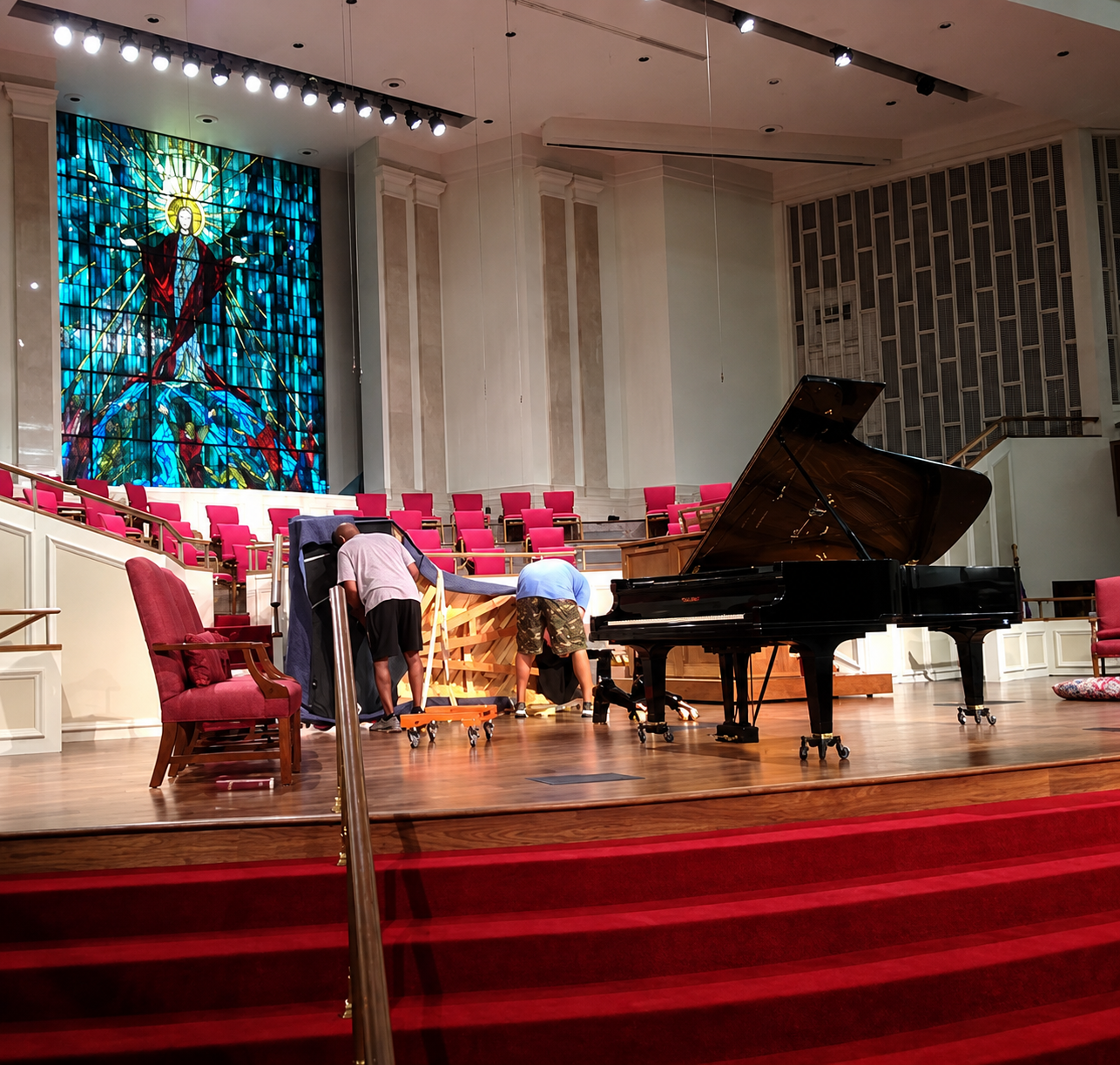
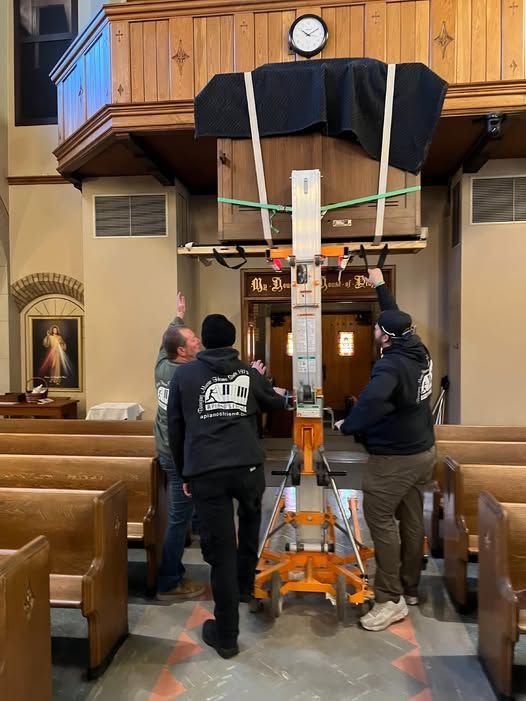
CONGREGATIONS NOTICE THE DAY THE ORGAN GOES SILENT.
Few instruments in a congregation carry as much weight in the life of a building. A sanctuary organ has accompanied funerals, weddings, baptisms, and 50 years of Sunday mornings, week after week, for the people sitting in those pews, and its absence registers immediately, even with a congregation that had never really thought about it before.
So the schedule matters as much as the handling. We plan around service times, work with your builder or technician where one is involved, and aim to shorten the silence rather than extend it.
- Sequenced disassembly and labeling
- Console, pipework, and bench handling
- Reassembly in the destination space
- Scheduling around service times
CHURCH ORGAN ASSEMBLY AND MOVING
ONE MISLABELED RANK CAN COST A CONGREGATION MONTHS.
Pipes look interchangeable and are not. Each one belongs to a specific rank, a specific position, and a specific length of tuning slide. Reassembly depends entirely on how carefully the removal was documented, which is why our crews photograph, label, and rack pipework methodically during removal instead of stacking it into crates and leaving somebody to sort the problem out later at the far end of the project.
TEXAS CHURCHES BUILD BIG AND REMODEL OFTEN.
Growing congregations across San Antonio and Austin, TX add sanctuaries, expand campuses, convert fellowship halls, and renovate chancels on a regular basis, and the organ usually has to move for every one of those projects. High ceilings, choir lofts, tight spiral stairs to a balcony, and chancel platforms all shape how the instrument comes apart and where it can safely go back together afterward.
50 YEARS OF PUTTING SANCTUARY INSTRUMENTS BACK TOGETHER.
Pipe organs, console organs, and electronic instruments have all come through our hands, from small chapel units to sanctuary installations spread across a chamber and a loft. That experience shows up in the reassembly, where an unlabeled part or a forgotten cable becomes somebody's very long week. We would rather spend the extra hour on documentation during removal than lose a week to it later. What is your building working around this year?
WHAT A PROPERLY HANDLED ORGAN MOVE PROTECTS
PIPEWORK WITHOUT DENTS
Metal pipes bend under their own weight if racked carelessly, and a bent pipe speaks differently or stops speaking at all. Careful racking keeps every rank sounding the way it did before the move.
A SHORTER SILENCE
Planning the sequence in advance compresses the downtime. Congregations get their instrument back sooner, and the music program spends fewer weeks working around an absence nobody enjoys.
DOCUMENTATION THAT SURVIVES
Photographs, labels, and diagrams from the removal make reassembly straightforward for whoever performs it. That record stays useful to your technician long after our crew has finished and gone home.
RESPECT FOR THE SPACE
Sanctuaries hold pews, flooring, and finishes that matter to the people who maintain them. Protection goes down before anything moves, so the room is not repaired afterward at the church's expense.
BUDGETS THAT HOLD
Damage during a move turns a scheduled project into an emergency repair fund conversation with a board. Careful handling keeps the cost where the committee originally approved it.
WORSHIP UNINTERRUPTED
Work planned around services, rehearsals, and funerals means the building keeps functioning. Nobody has to cancel a program because a crew needed the chancel on a Sunday morning.
WHAT WE HANDLE
OUR CHURCH ORGAN WORK
Organ projects range from shifting a console 20 feet across a chancel to dismantling an entire instrument ahead of a building sale. These are the jobs congregations bring to us most often.
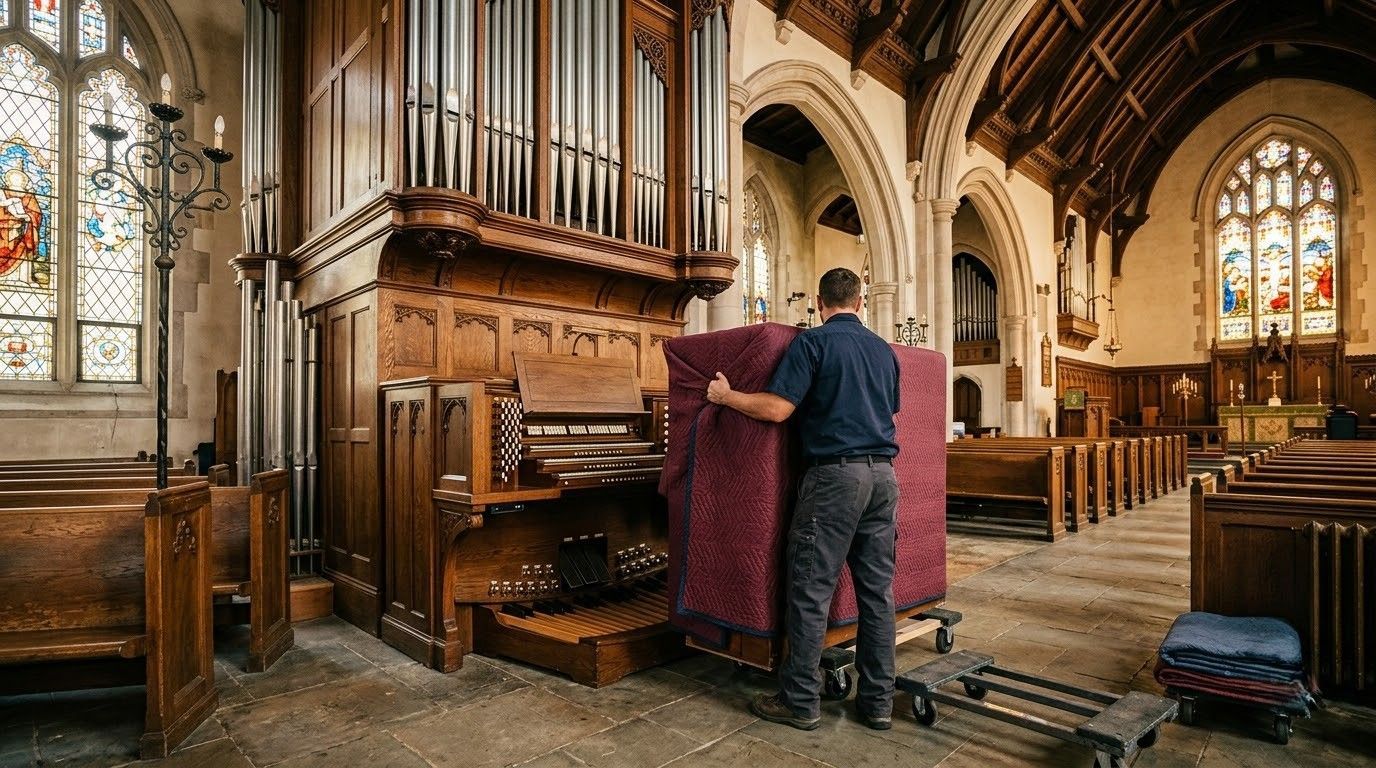
CONSOLE MOVES
Console Organ Moving
Consoles are heavy, awkward, and full of cabling that resents rough handling. Connections get documented and disconnected properly, and the cabinet travels braced rather than balanced on a dolly and hoped for.
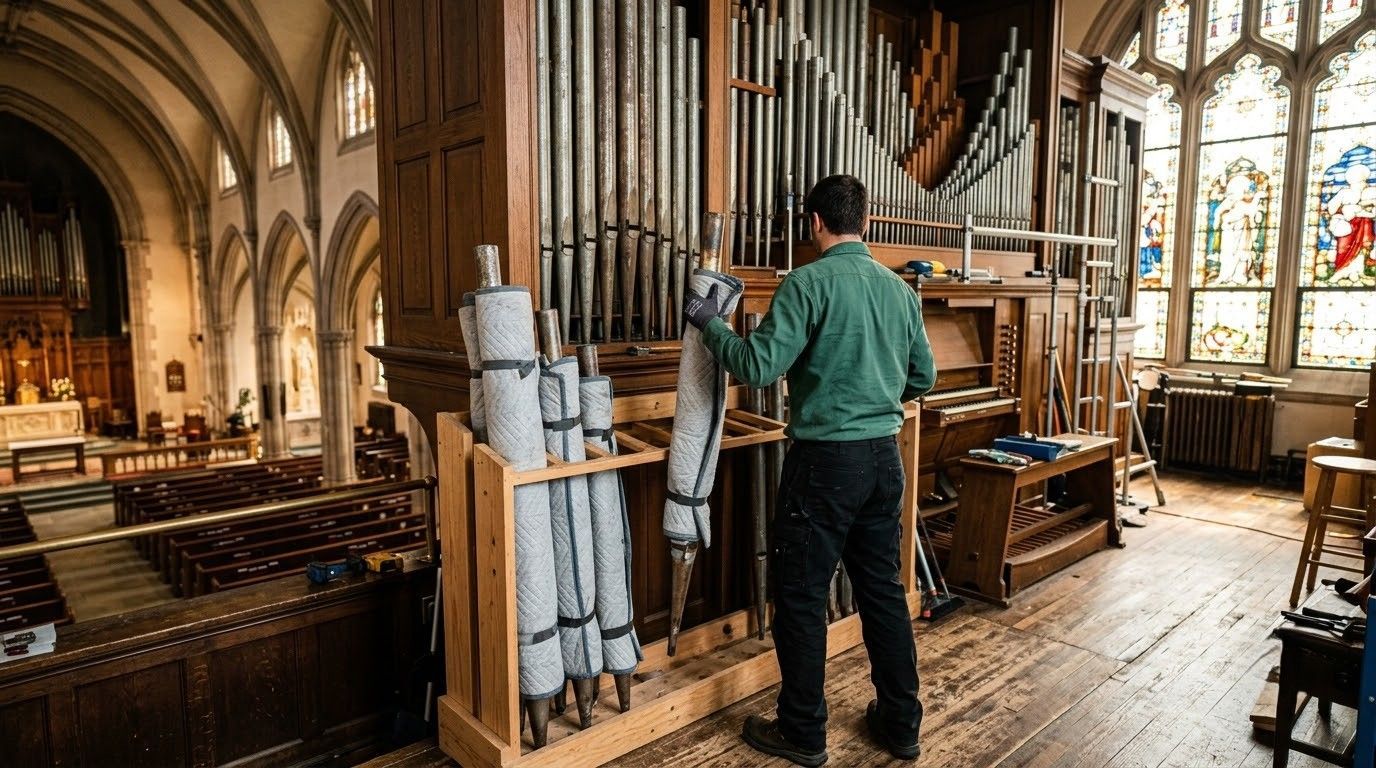
PIPE WORK
Pipe Organ Disassembly
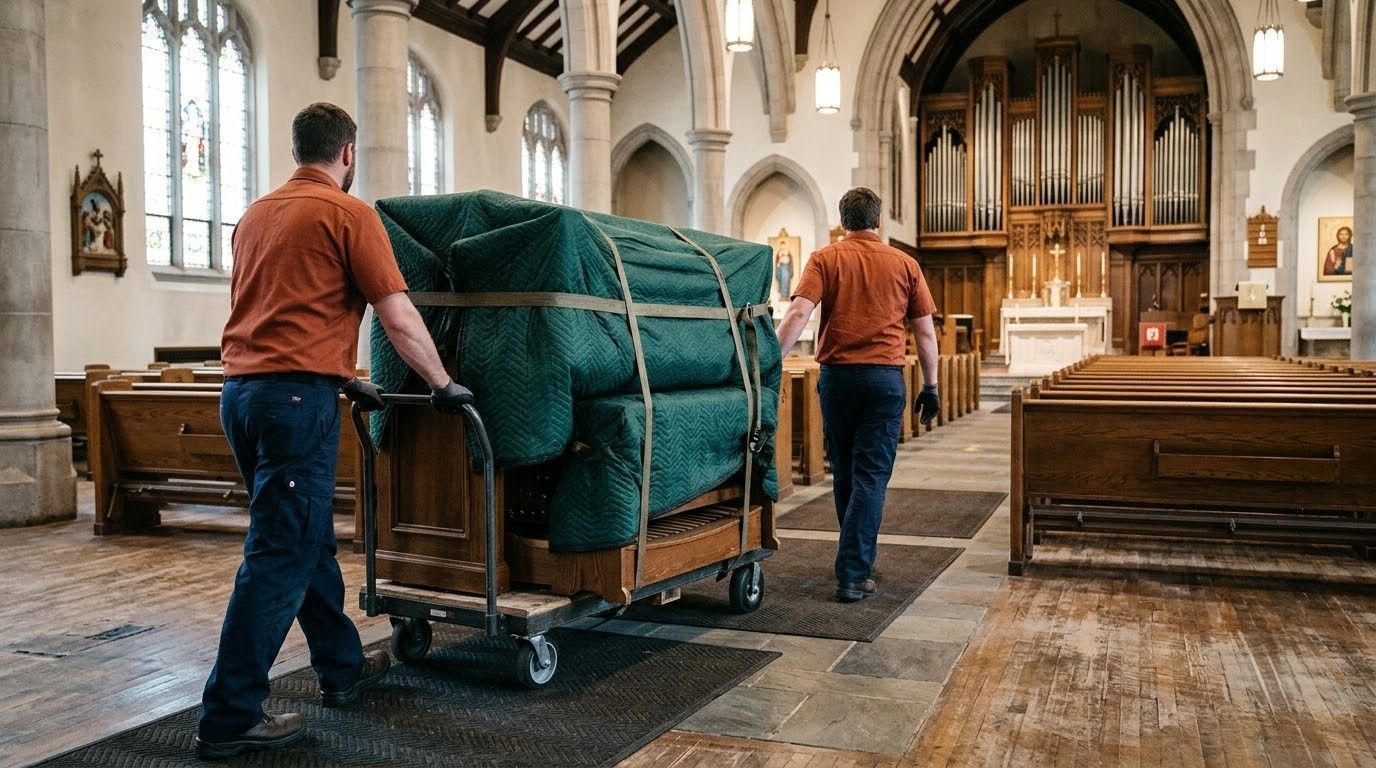
Ranks come out in sequence, labeled and photographed as they go. Windchests, reservoirs, and blowers each get their own handling plan, because none of them tolerates being treated like ordinary freight.
PUT BACK
On-Site Reassembly
Reinstallation follows the documentation from removal, part by part and rank by rank. The instrument goes back together the way it came apart, ready for your technician to handle final voicing and tuning.
SANCTUARY SHIFTS
In-Building Organ Relocation
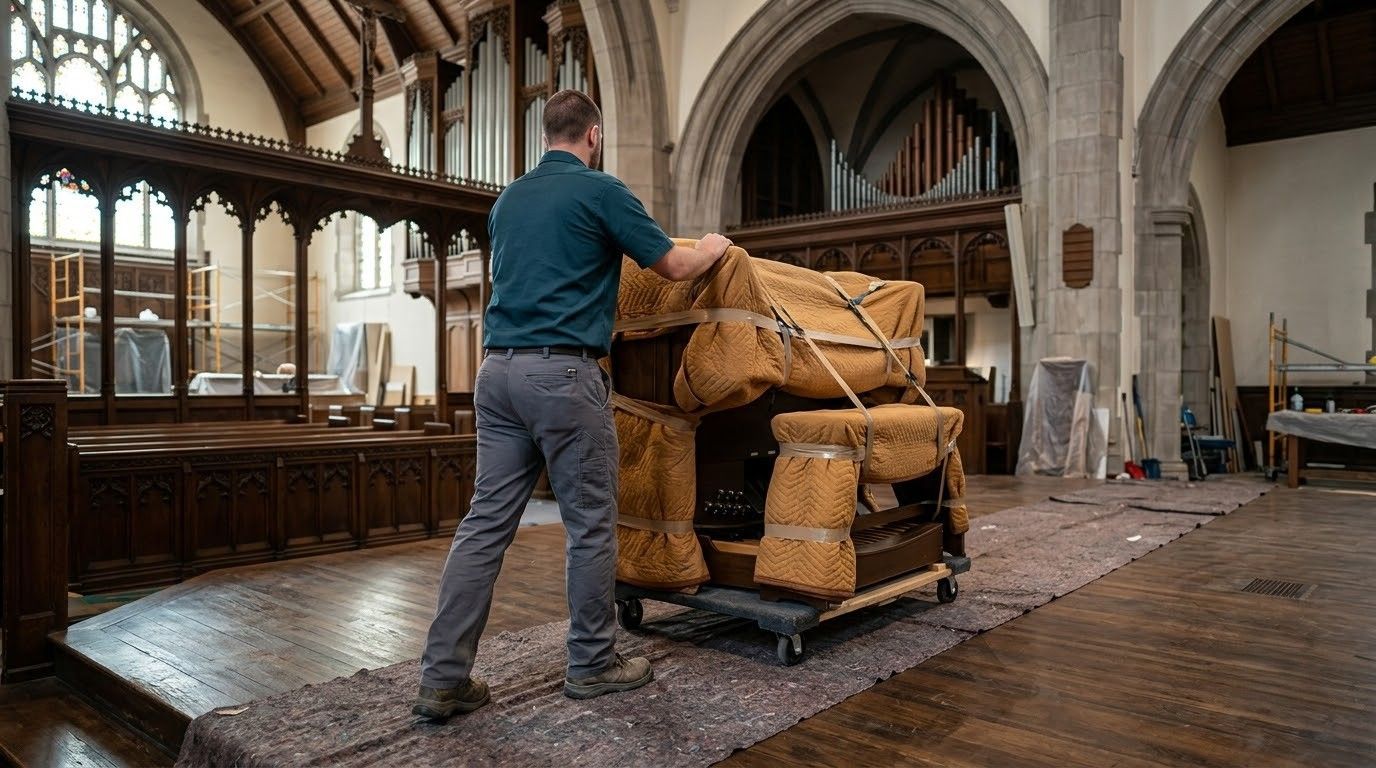
Chancel remodels and platform changes often move an instrument only a short distance. Short moves still require full disassembly, protection for the flooring, and the same sequencing discipline as a long haul.
LONG HAUL
Organ Transport Between Buildings
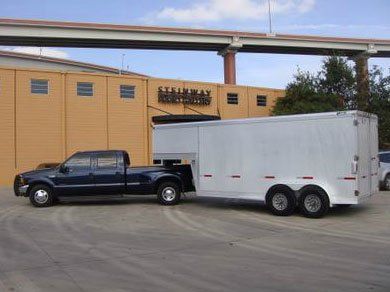
When an instrument is sold, donated, or relocated to another congregation, it travels crated and braced. Both buildings get scoped first, because loading docks and choir lofts rarely resemble each other.
HOLD SPACE
Organ Storage During Renovations
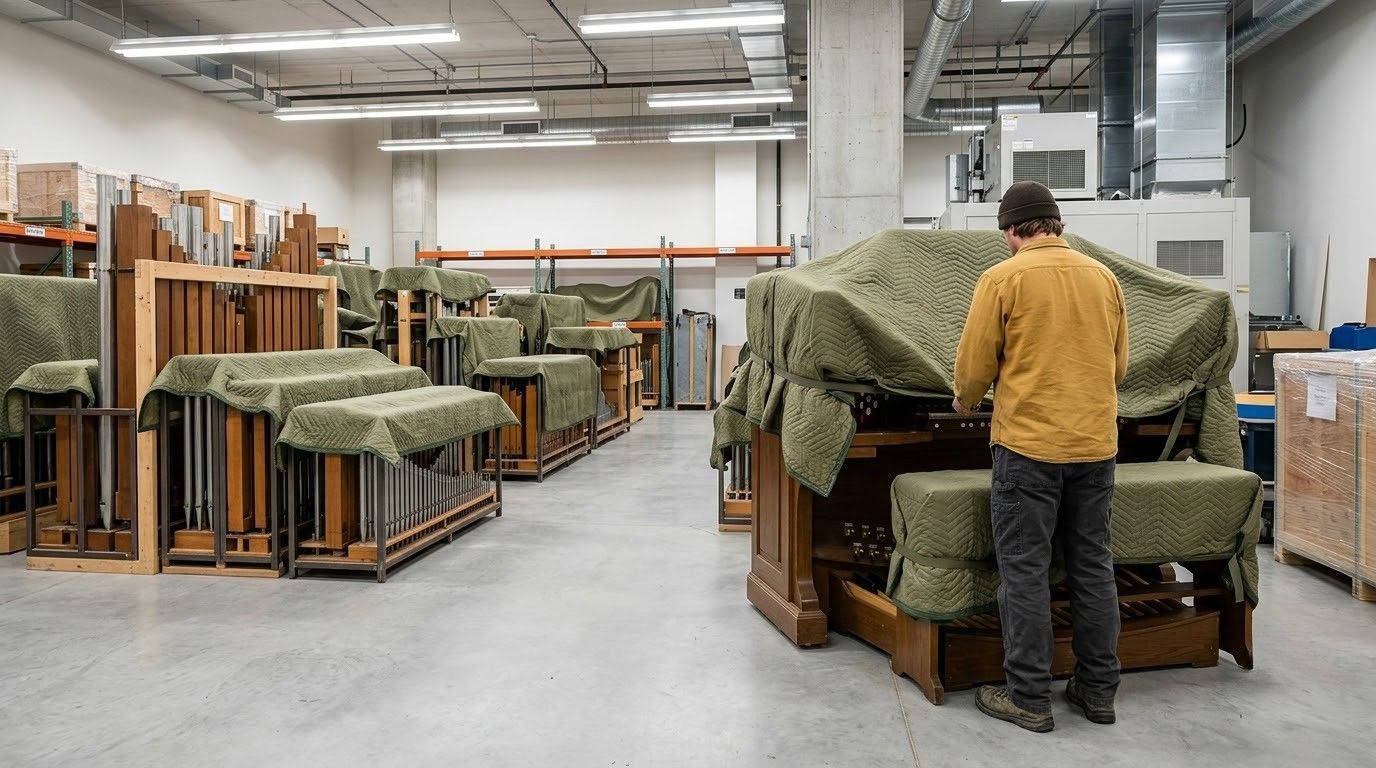
Construction dust and temperature swings are hard on leather, wood, and pipe metal alike. Components wait safely in climate-controlled storage until the space is finished and genuinely ready to receive them again.
THE WORD ON OUR WORK
WHAT OUR CLIENTS SAY.
Churches tell us the same things afterward: the crew respected the building, the schedule held exactly as promised, and the instrument played again on the Sunday it was supposed to. That feedback sits inside our 4.8 average across 128 ratings and reviews.
faq
frequently asked
questions.
Organ projects raise questions that ordinary piano moves never do. Here is what churches most often want to understand before scheduling a disassembly, the transport, or the reinstallation.
Can a pipe organ be moved to another church?
Relocated instruments are common when congregations merge, sell a building, or receive a donation. Both spaces need scoping first, since chamber dimensions and ceiling height determine whether an instrument fits.
How long does it take to disassemble a church organ?
It depends entirely on size. A small chapel instrument may come apart in a day, while a sanctuary organ with multiple divisions and hundreds of pipes can occupy a crew for a week.
Does an organ need to be tuned or voiced after a move?
Always. Pipework responds to the acoustics and the climate of its new room, so a technician handles final tuning and voicing once the instrument is reassembled and the space has settled.
Can an organ be moved within the sanctuary during a remodel?
Yes, and it is one of the more frequent requests Piano Handlers takes from churches in San Antonio, TX. Short distances still require proper disassembly, because dragging a console risks damage that is expensive to correct.
What happens to the pipes during transport?
They travel racked, padded, and labeled by rank and position. Metal pipes deform easily under pressure, so nothing gets stacked loose and nothing shares a crate without separation between the pieces.
Do you move electronic and digital church organs?
Digital instruments come through as well, carrying speaker cabinets, amplifiers, and cabling that need documenting before disconnection, and the console itself deserves the same bracing and padding a pipe organ console receives.
Should the organ builder or technician be involved in the move?
Where a congregation has one, absolutely. We coordinate with builders and technicians routinely, handling transport and physical reassembly while they manage voicing, tuning, and any regulation the instrument needs afterward.
Why should our church choose Piano Handlers in San Antonio, TX?
We document everything, work around your service schedule, and have handled sanctuary instruments for 50 years. Churches across San Antonio, TX have trusted Piano Handlers with organs they could never replace.
HOW WE WORK
FROM THE FIRST WALKTHROUGH TO THE FIRST NOTE, HERE IS HOW.
STEP 01
Walk the Building With Us
We visit both spaces, measure the access, and look closely at the instrument itself. Choir lofts, chamber openings, doorways, and stair widths determine the entire plan, so nothing here gets estimated from a phone description.
STEP 02
Receive Your Free Estimate
A written estimate covering disassembly, transport, storage where it is needed, and full reassembly arrives within 1 to 3 business days, in a form your board or committee can review directly at its next meeting.
STEP 03
Document Before Disassembly
Photographs, labels, and diagrams all get made before a single component moves anywhere. That record is what makes reassembly genuinely predictable later, rather than an exercise in reverse engineering months after the fact.
STEP 04
Disassemble in Sequence
Pipework, windchests, reservoirs, the blower, the console, and the bench all come apart in the order the instrument requires. Each category gets its own racking, its own padding, and its own handling method.
STEP 05
Transport or Store
Components travel braced and separated from each other, or wait in climate-controlled storage while construction finishes. Nothing sits in a dusty sanctuary under a tarp waiting for the contractor to finally wrap up.
STEP 06
Reassemble and Hand Off
The instrument goes back together following the documentation exactly, then we hand it over to your technician for final voicing and tuning. Your congregation hears it again on the schedule we agreed to.
GET YOUR FREE ESTIMATE
TELL US ABOUT YOUR INSTRUMENT AND THE ESTIMATE COMES BACK, FREE.
Reach us through the request form or contact page with the organ type, both locations, and your project timeline. A written estimate suitable for your board or committee arrives within 1 to 3 business days.
WHAT YOUR ORGAN ESTIMATE COVERS:
- Walkthrough of both spaces
- Documented, sequenced disassembly
- Racking and padding for all pipework
- Transport or climate-controlled storage
- Full reassembly on site
- Scheduling around your services