

Residential Piano Moving
RESIDENTIAL PIANO MOVING IN San Antonio and Austin, TX.
A studio upright runs near 400 pounds and a classic full-size upright often passes 500, which is why crew size rather than raw strength decides how a move goes. Piano Handlers handles residential piano moving in San Antonio, TX for spinets, consoles, studios, uprights, baby grands, full-size grands, and harpsichords, including upstairs carries, balcony hoists, and in-home relocations. After 50 years, we plan the route, the padding, the crew size, and the lift before anybody touches your instrument.
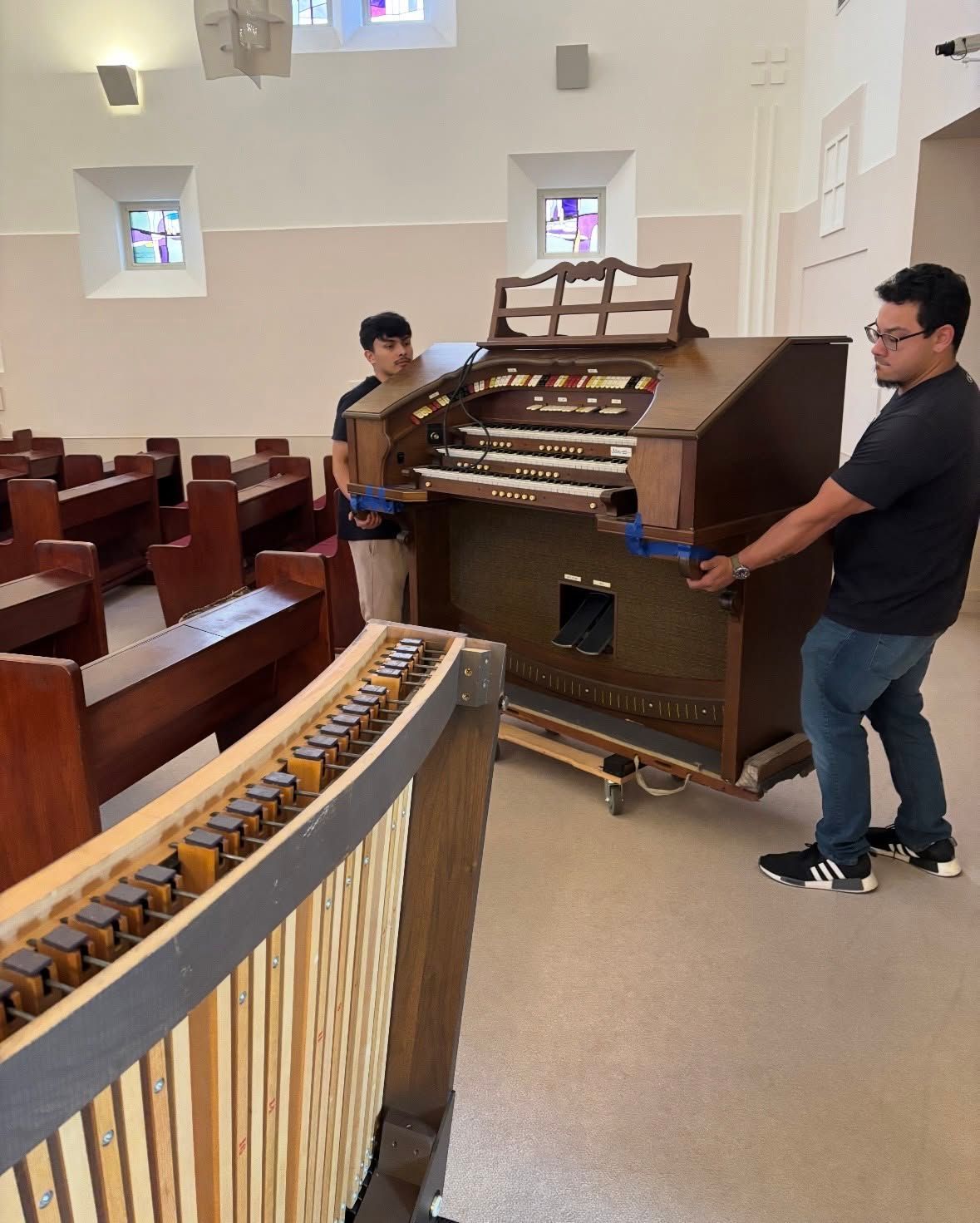
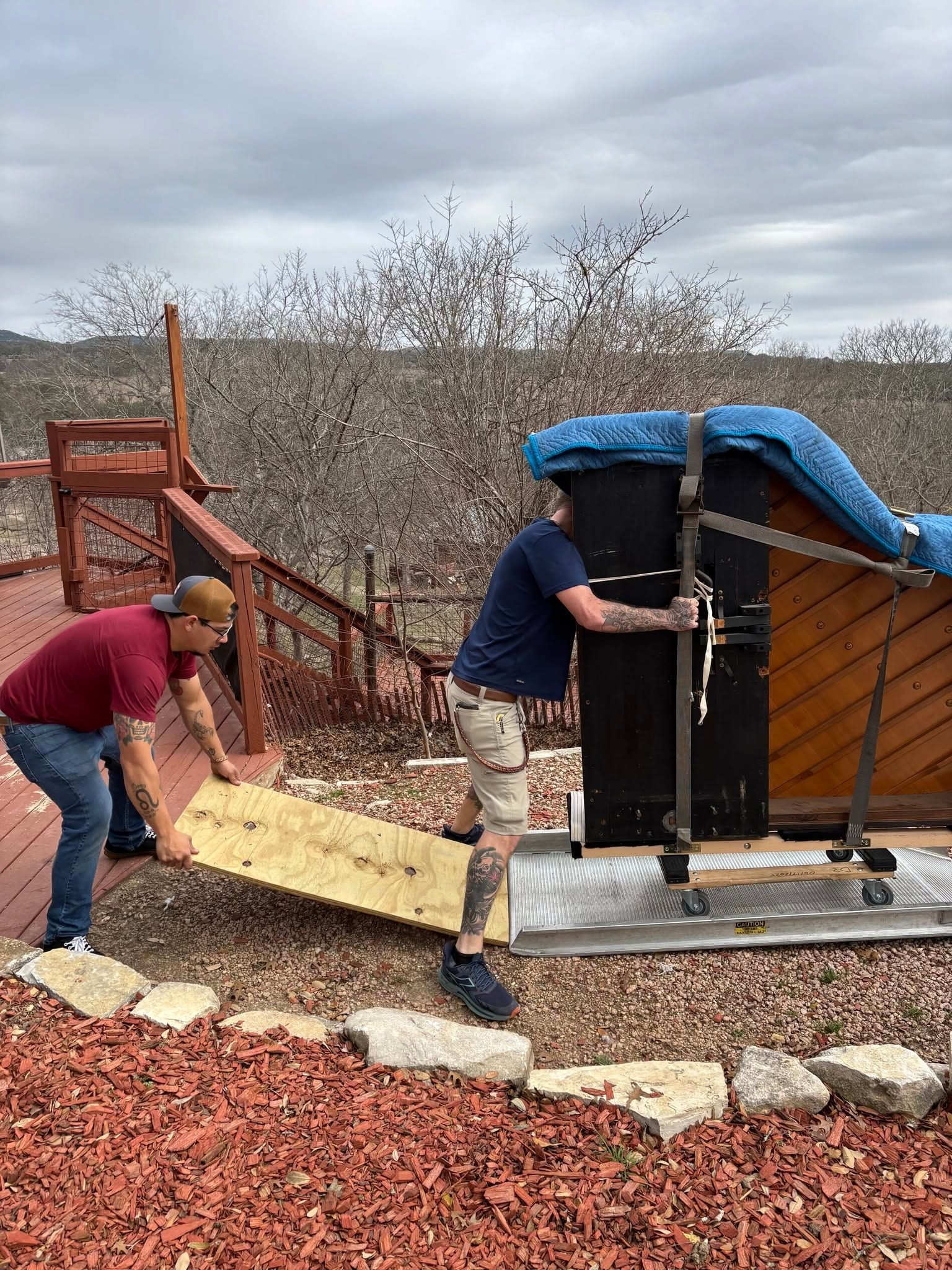
A PIANO IS THE HEAVIEST THING IN YOUR HOUSE AND THE MOST FRAGILE.
Weight and delicacy rarely share an object, but a piano holds both at once. Roughly 20 tons of string tension press against a wooden frame that reacts to every jolt and every humidity swing. Move it carelessly and the damage tends to surface weeks later, in a soundboard crack or an action that no longer feels right under the fingers.
So preparation is the actual job here. Measuring, wrapping, and deciding how an instrument will travel takes longer than the carry itself, and that imbalance is exactly the point.
- Route measured before anything is lifted
- Legs, lyre, and pedals removed as needed
- Soundboard and action protected throughout
- Upstairs carries and balcony hoists
RESIDENTIAL PIANO MOVING
OLDER SAN ANTONIO HOMES WERE NOT BUILT AROUND PIANOS.
Narrow hallways, quarter-turn staircases with no landing, front steps rising straight off the sidewalk, and doorways cut long before central air existed all shape how an instrument leaves a house. We walk the route first, measure the tightest point on it, and choose the approach that fits. Sometimes that means a piano board and four people. Sometimes it means going out over a balcony rail instead.
HUMIDITY HERE SWINGS MORE THAN MOST PIANOS LIKE.
Monthly average relative humidity in this city runs between 63% and 71%, while a cooled house in August can sit far below that. Wood moves with every swing, which is why an instrument that has just traveled needs a settling period in its new room before tuning. We place it where it will stay, away from vents, exterior walls, and direct afternoon sun.
OUR CREWS HAVE SEEN YOUR STAIRCASE BEFORE.
Very little left in a San Antonio house genuinely surprises us. Spiral stairs, sunken living rooms, pier-and-beam thresholds, second-floor game rooms perched above a garage: 50 years of residential work has put our crews in all of them, repeatedly. That history is why we can tell you over the phone whether a move is straightforward or actually difficult, and price it honestly either way. What does your route look like?
WHAT A CAREFUL HOUSE MOVE PROTECTS
TUNING THAT HOLDS
A piano moved gently arrives closer to pitch than one bounced through a doorway. Less shock in transit means less correction afterward and a shorter wait before the instrument sounds like itself again.
FINISH WITHOUT SCARS
Cabinet corners, pedal lyres, and polished lids collect damage fast whenever padding is an afterthought. Wrapped properly, your piano reaches its new room looking precisely the way it looked leaving the old one.
FLOORS AND WALLS INTACT
Your instrument is not the only thing at risk on moving day. Doorframes, banisters, hardwood, and stair treads all survive when weight rides on proper equipment instead of getting dragged and pivoted.
NOBODY GETS HURT
Back injuries from amateur piano moves are common and completely avoidable. Trained handlers keep friends, family, and neighbors out of a lift that was never really a favor worth asking anyone for.
ONE APPOINTMENT, DONE
A planned move finishes in a single visit. No second trip for missing straps, no instrument abandoned on a landing, no rescheduling around a problem that somebody discovered halfway through the carry.
A ROOM THAT SUITS IT
Placement matters nearly as much as transport. Set away from exterior walls, vents, and sunlight, your piano holds its tuning longer and lives in the conditions its wood was built for.
WHAT WE MOVE
OUR RESIDENTIAL PIANO MOVING WORK
Every household instrument carries its weight differently, hides its own weak point, and needs its own handling plan. These are the pianos and keyboards that come through San Antonio homes most often.
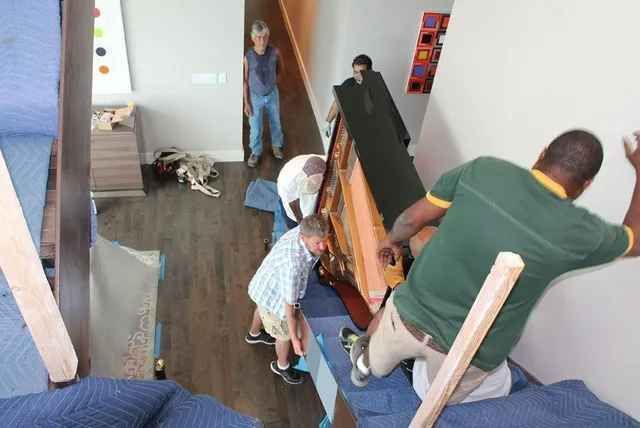
UPRIGHT PIANOS
Upright and Console Piano Moving
Vertical instruments carry their weight high in the cabinet, which makes them tip easily on stairs. Straps and a proper dolly keep the center of gravity controlled from the first lift through the final placement.

GRAND PIANOS
Baby Grand and Full-Size Grand Moving
Legs, lyre, and pedals come off first, the case travels on its side on a padded board, and reassembly happens in the destination room. Nothing rests on a leg bolt at any point during transport.
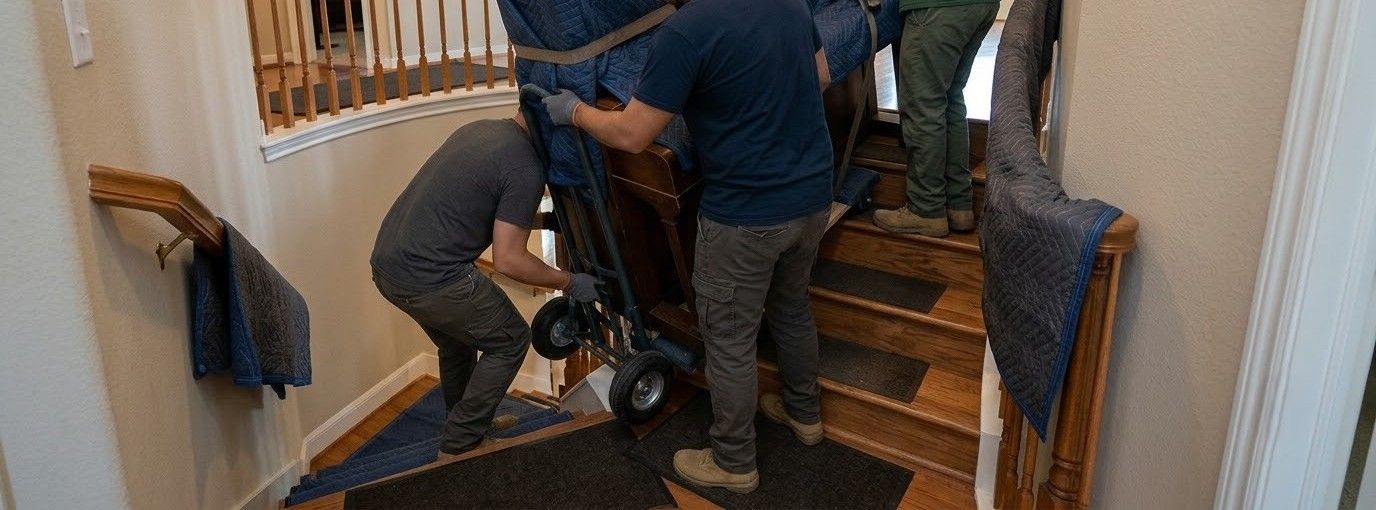
STAIRS ONLY
Upstairs and Downstairs Piano Moves
Steps get counted, landings get measured, and crew size is set before arrival. Weight moves one tread at a time under full control, rather than in the rushed pushes that crack cases and railings.

TIGHT ACCESS
Balcony Hoists and Window Removals
When no staircase will take the instrument, it travels up or down the outside of the building instead. Rigging gets set, the route below is cleared, and the lift itself stays slow and deliberate.
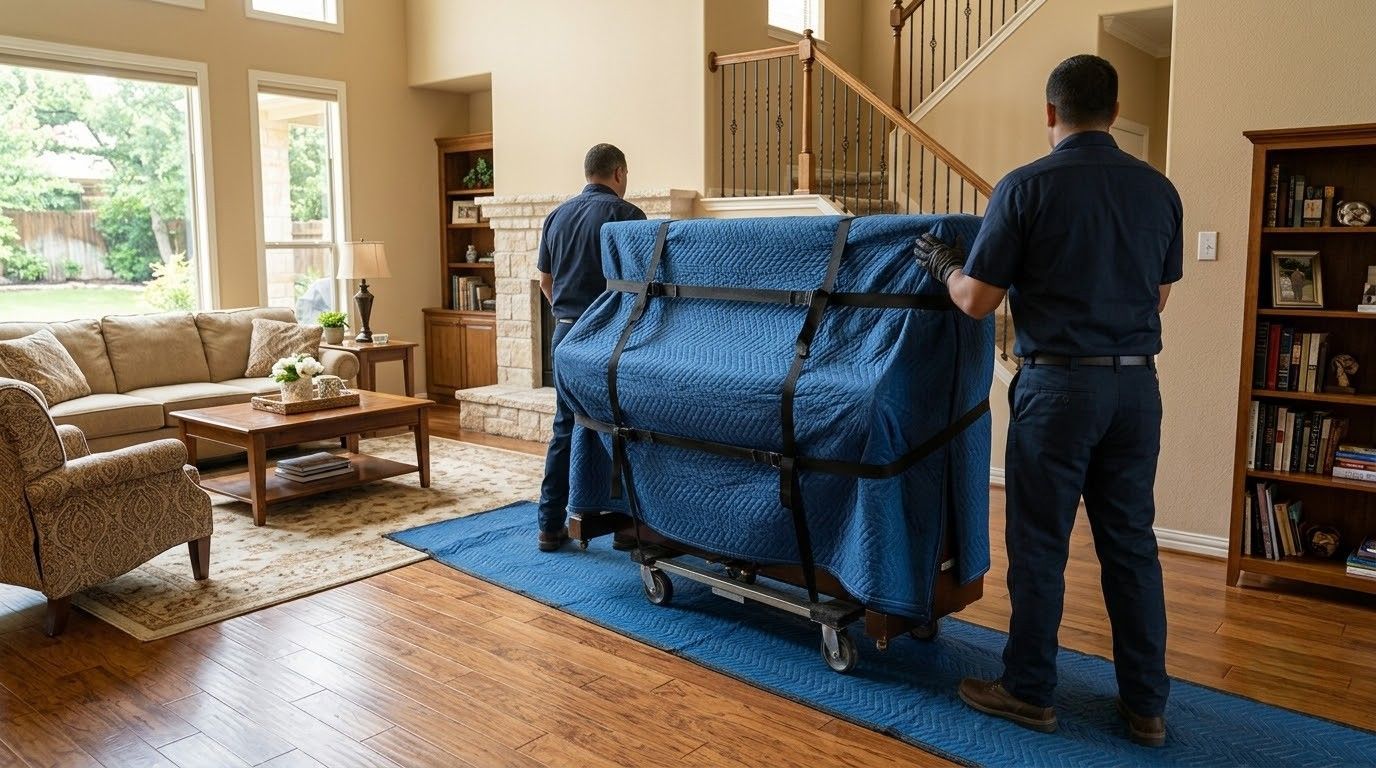
SAME HOUSE
In-Home Piano Relocation
Rearranging a room, refinishing a floor, or shifting an instrument to a quieter wall still calls for real equipment. Short distances hide identical risks, only with far less time to react to them.
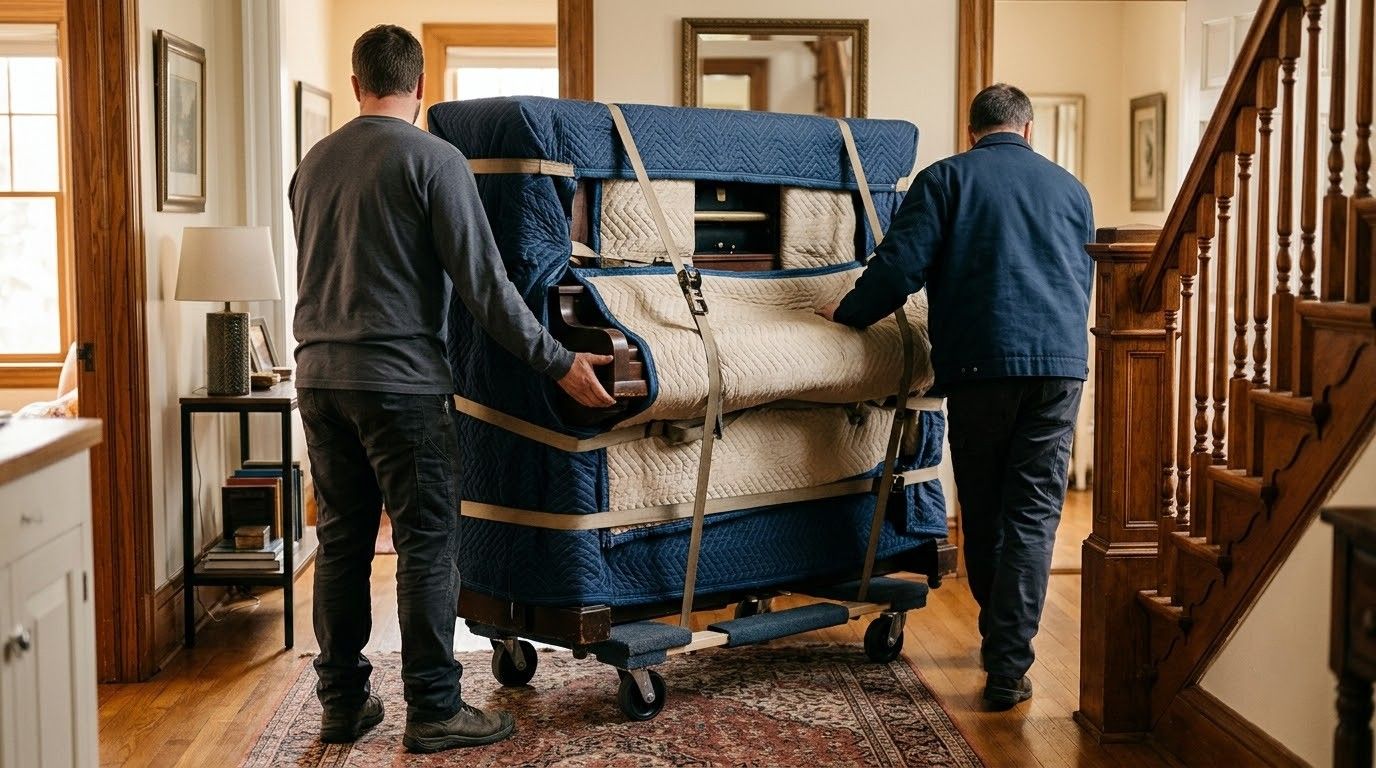
OTHER KEYBOARDS
Harpsichord, Studio, and Player Piano Moving
Delicate jacks, added electronics, and unusual case shapes each change the handling plan. These instruments get wrapped and braced around their own vulnerabilities rather than a generic upright piano checklist.
THE WORD ON OUR WORK
WHAT OUR CLIENTS SAY.
A 4.8 average across 128 ratings and reviews sits behind us, and the comments stay consistent: crews arrive when they said they would, take stairs without drama, and leave a house as clean as they found it. That is the standard every residential move gets held to.
faq
frequently asked
questions.
Homeowners tend to ask the same practical questions before moving day arrives. Here is what to expect from the walkthrough, the carry itself, and the first few weeks in the new room.
How do movers get a piano up a flight of stairs in a house?
The instrument goes onto a board or dolly, straps take the load, and the crew moves it one tread at a time with people above and below. Landings and turns are measured first, because those are the pinch points.
What is a balcony hoist and when does a piano need one?
A hoist lifts the instrument along the outside of a building using rigging, and it becomes the answer whenever a staircase turns too tightly or a doorway is simply too narrow for the case to pass.
Do I need to remove interior doors for a piano to fit?
Occasionally, and we handle that on site. Pulling a door off its hinges buys close to 2 inches of clearance, which is frequently the difference between a comfortable pass and scraped finish on both sides.
Where is the best place in a room to put a piano?
Against an interior wall, away from heating vents, exterior doors, fireplaces, and direct sunlight. Stable conditions keep the instrument in tune longer, and interior walls swing far less in temperature than exterior ones do.
Can you move a piano from one room to another in the same house?
Yes, and Piano Handlers does it often for remodels, new flooring, and rearranged living rooms across San Antonio, TX. The distance is short but the equipment stays identical, because casters and legs fail on thresholds.
How many movers will come to my home for a piano move?
Crew size follows the instrument and the access. A spinet on one level may take two people, while a full upright or grand with stairs involved brings four or more trained handlers with proper rigging.
What should I clear out of the way before moving day?
Clear the path completely: rugs, side tables, lamps, low-hanging fixtures, and anything on the piano itself. A wide, empty route lets the crew concentrate on the instrument rather than navigating around obstacles.
Why should we choose Piano Handlers for residential piano moving in San Antonio, TX?
We are locally and family-owned, available 24/7, and our free estimates come back within 1 to 3 business days. Piano Handlers has been protecting instruments in San Antonio, TX homes for 50 years.
HOW WE WORK
FROM YOUR FIRST CALL TO THE FINAL PLACEMENT, HERE IS HOW.
STEP 01
Tell Us About the Instrument
We start with the type of piano, its age, both addresses, and every detail about the access at each end. Photos of the stairs and doorways help more than most people expect them to.
STEP 02
Receive Your Free Estimate
Within 1 to 3 business days, a written estimate arrives covering crew size, equipment, access requirements, and timing. Nothing about the price should surprise anybody on moving day once the truck is parked in your driveway.
STEP 03
Walk and Measure the Route
On moving day, we walk both routes end to end before unloading a single strap. Turns, thresholds, ceiling heights, and landing widths all get checked against the plan, and the approach gets adjusted immediately if reality disagrees with it.
STEP 04
Prepare and Protect
Legs, lyre, and pedals come off wherever the instrument needs it. Blankets, corner protection, and straps go on next, and floors, doorframes, or banisters along the route get covered before any weight leaves the ground.
STEP 05
Move With Control
The instrument travels on boards and dollies, handled by a crew sized specifically for it. Nobody rushes, nobody improvises, and every stair, turn, and hoist follows the exact sequence we agreed on during the walkthrough earlier.
STEP 06
Place, Reassemble, and Level
Grand legs and pedal lyres go back on, the piano is set in its final spot, and casters get leveled. We recommend tuning after two to four weeks of settling in the new room.
GET YOUR FREE ESTIMATE
SEND US THE DETAILS AND THE ESTIMATE COMES BACK, FREE.
Use our request form or contact page with the instrument type, both addresses, and a description of the access. A written estimate follows within 1 to 3 business days, with no obligation attached to it.
WHAT YOUR FREE ESTIMATE COVERS:
- Crew size matched to your instrument
- Equipment needed for the route
- Stairs, hoists, or threshold handling
- Disassembly and reassembly requirements
- Timing that fits your closing date
- Storage options if the dates do not line up