

What Every Piano Owner Needs to Know Before Moving Day
Pianos are far more than mere pieces of furniture; they are intricate, delicate instruments, complex architectural achievements, and cherished family heirlooms. Whether you own a concert grand piano that serves as the focal point of your living room or a classic upright passed down through generations, approaching a piano moving project presents a unique set of physical, spatial, and logistical challenges. The sheer mass, awkward weight distribution, and internal sensitivity of these instruments make moving them a high-stakes task that requires careful planning, specialized equipment, and a clear understanding of the risks involved.
Preparing for a move involves much more than simply clearing a path to the front door. Understanding the physical demands of the process and knowing how to protect both the instrument and your home can prevent costly structural damage and serious personal injury. According to HomeGuide, an upright piano can weigh anywhere between 300 and 900 pounds, depending on type and size. Grand pianos can weigh even more, often exceeding a thousand pounds. Managing this substantial weight safely requires foresight, careful preparation, meticulous attention to detail, and a deep appreciation for the art of specialized transport.
Understanding the Physical Mass and Delicate Nature
To appreciate the difficulty of relocating a keyboard instrument, one must understand how a piano is constructed. A piano’s weight is concentrated heavily in its massive cast-iron plate, which holds the immense tension of the steel strings. This creates a high center of gravity, particularly in upright models, making them prone to tipping over if handled improperly. At the same time, the outer cabinet is constructed from finely finished hardwoods that are exceptionally prone to being scratched, gouged, or dented during transit.
Beyond the external structure, the internal mechanics of a piano are exceptionally delicate and complex. Thousands of moving parts, including wooden hammers, felt pads, copper strings, and delicate ivory or acrylic keys, work in precise harmony to produce sound. Subjecting these components to violent shocks, sharp drops, or sudden climatic shifts can misalign the action, crack the soundboard, or cause severe structural damage. Recognizing this dual nature—immense physical weight combined with internal fragility—is the foundational first step toward planning a successful move.
Preparing the Location and Measuring Access Routes
Long before moving day arrives, precise planning and detailed measurements are essential for a successful piano moving strategy. One of the most common mistakes owners make is assuming an instrument will easily fit through every doorway, hallway, and staircase along the exit route. Failing to measure pathways in advance often leads to mid-move stalls, scuffed walls, damaged door frames, and extreme frustration.
Begin by measuring the height, width, and depth of the instrument itself with complete accuracy. Next, trace the exact path the instrument will take from its current spot to the transport vehicle, and from the vehicle to its final destination in the new home. Measure all doorways, narrow hallways, stairwells, and entryways along the route. Pay close attention to tight corners and stair landings where turning radius becomes a critical factor. Identifying obstacles like steep outdoor steps, narrow porch rails, or uneven gravel paths early allows you to plan workaround strategies or inform your transport team well in advance.
Protecting the Instrument and Your Home
Safeguarding both the instrument and the surrounding property requires specific protective materials and techniques. In any piano moving scenario, never attempt to relocate an instrument without proper padding and securing mechanisms. Heavy-duty moving blankets are essential for wrapping the entire cabinet, shielding the polished wood finish from scratches, dust, and minor impacts. These blankets should be secured tightly using heavy-duty packing tape or stretch wrap, ensuring the tape never touches the finished wood directly.
In addition to wrapping the exterior, the moveable elements of the instrument must be secured against shifting. The keybed cover should be locked or securely padded to prevent the keys from shifting or sustaining damage. For grand pianos, the pedals and legs must often be carefully removed and wrapped separately, while the body is tilted onto a specialized transport board. Protecting your home is equally vital. Placing floor runners, neoprene mats, or thick cardboard along the transit route protects hardwood floors and carpets from being crushed, gouged, or scuffed under intense weight.
Handling Equipment Correctly for Safe Transport
Attempting to transport an instrument using standard household moving supplies is a recipe for disaster. Professional movers rely on specialized gear designed specifically to distribute weight evenly and maintain control throughout the transition. Standard hand trucks or general utility dollies are rarely suitable, as they lack the width, wheel capacity, and stability needed to support such a heavy, top-heavy load.
Proper transport requires a dedicated piano dolly featuring heavy-duty, non-marring rubber wheels and a wide, padded base capable of supporting high weight capacities. Heavy-duty hump straps or shoulder rigging straps are also necessary, allowing movers to leverage their leg strength while maintaining upright posture and balance control. When navigating stairs or loading trucks, heavy ramps with high weight ratings are essential to ensure smooth movement without sudden drops. Having the correct tools on hand transforms a chaotic piano moving task into a controlled, manageable procedure.
Keeping it Professional
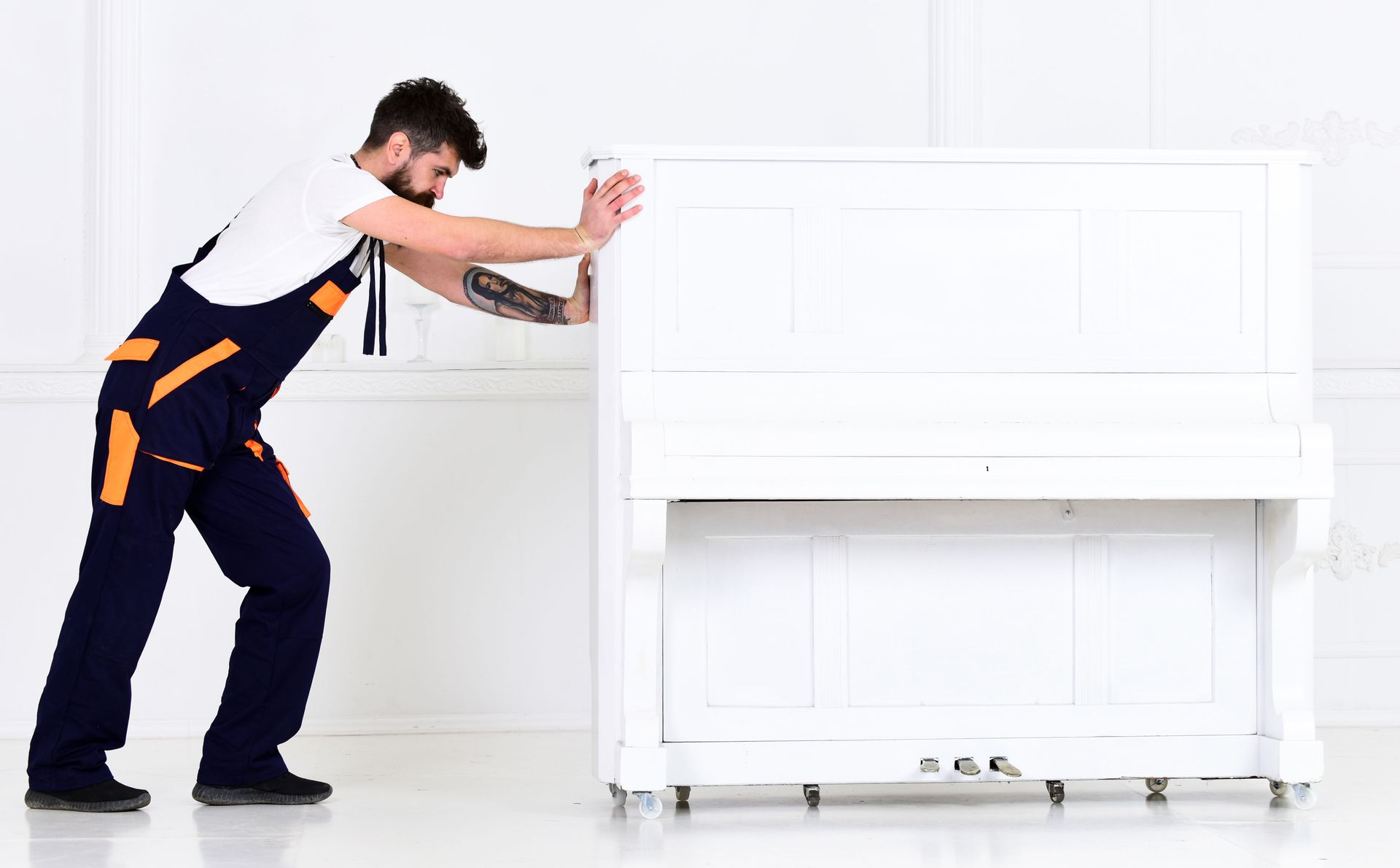
When evaluating whether to tackle the job yourself or hire professionals, the risks of a do-it-yourself approach quickly become clear. Standard home insurance policies rarely cover damages resulting from self-conducted moves, leaving you financially responsible for any ruined flooring, broken drywall, or shattered instruments. Furthermore, the risk of personal injury, including severe muscle strain, crushed fingers, or spinal injuries, is exceptionally high when untrained individuals attempt to lift hundreds of pounds.
Engaging a professional piano moving company offers invaluable protection, expertise, and complete peace of mind. Professional crews undergo extensive training to master specialized lifting techniques, balance control, and navigate tricky architectural features like spiral staircases or narrow turns. Furthermore, an established piano moving company carries specialized cargo and liability insurance, ensuring that your instrument and your property are fully protected against unforeseen accidents. The cost of hiring specialists is a modest investment compared to the steep expenses of structural repairs or replacing a ruined instrument.
Getting Started With Post-Move Care
The broader piano moving experience does not end the moment the instrument reaches its new room. Pianos are sensitive to changes in temperature and humidity, as their soundboards, pinblocks, and cabinets are made of natural wood that expands and contracts with environmental fluctuations. Transporting an instrument in an open truck bed or subjecting it to drastic weather shifts during transit can cause the wood to warp, affecting its structural integrity and tonal quality.
After the move is complete, place the instrument along an interior wall away from direct sunlight, drafty windows, air conditioning vents, or radiators. Once settled in its new environment, allow the instrument to acclimate to the room's temperature and humidity levels for at least two to three weeks before scheduling a professional tuning. The moving process inherently alters string tension, but letting the wood stabilize in its new environment ensures that a subsequent tuning will hold effectively, restoring your instrument to its full, beautiful resonance.
Taking the time to understand the unique demands of piano moving ensures that your valued instrument transitions safely to its new location. By taking accurate measurements, utilizing proper equipment, protecting surfaces, and trusting experienced professionals with the heavy lifting, you safeguard both your home and your investment. Proper care and foresight allow your piano to continue delivering music and joy for generations to come. Contact the experts at Piano Handlers today to schedule your move and ensure your cherished instrument receives the professional care and precision it deserves.












Share On: